· Enterprise AI  · 8 min read

Breaking Vendor Lock-In: Dynamic MCP Skill Libraries and Path Dependency Protection for Elite Southeast Asian Professional Services

Learn how premium aesthetic groups and corporate law firms in Malaysia and Singapore leverage Model Context Protocol (MCP) skill injection, custom data-exchange path logging, and real-time AI performance monitoring to secure platform sovereignty and eliminate generic cloud migration risks.

Learn how premium aesthetic groups and corporate law firms in Malaysia and Singapore leverage Model Context Protocol (MCP) skill injection, custom data-exchange path logging, and real-time AI performance monitoring to secure platform sovereignty and eliminate generic cloud migration risks.

🚀 For managing partners, executive chairmen, and enterprise founders steering luxury medical aesthetic chains and high-stakes corporate law firms across Kuala Lumpur and Singapore, data sovereignty has arrived at an existential crossroads. As firms aggressively transition from basic chatbots to fully autonomous agentic workflows to automate patient triage or structure complex multi-jurisdictional M&A discovery, they face a silent, systemic corporate trap: architectural lock-in. Traditional off-the-shelf software solutions and generic, flat cloud pipelines quietly hardcode your enterprise workflows into their proprietary servers. By routing your premium clinical diagnostic charts or highly sensitive corporate litigation retainers through non-standardized cloud frameworks, software vendors systematically build a structural dependency. Over time, your unique operational intellectual property—the precise logic of how your systems fetch data, evaluate risks, and handle clients—becomes permanently trapped. Moving away from these legacy vendors to a native or open architecture becomes cost-prohibitive, forcing elite firms to pay escalating subscription fees just to access their own operational logic.

❌ Relying on closed, application-level automation wrappers is a direct compromise of corporate autonomy and regulatory governance under the Malaysia and Singapore PDPA frameworks. When a premium medical group or legal practice permits an external commercial plugin to dictate how data moves across internal databases, it relinquishes control over its execution path. If the software provider alters its API cost models, introduces unexpected updates, or experiences a systemic data leak, the enterprise remains structurally paralyzed. In complex, long-running systems, true platform security requires isolating the core generation model from the execution infrastructure. Without decoupled runtime layers and standardized data-exchange pathways, your automation loop easily risks cascading verification debt or state failure. To break this dependency while establishing ironclad compliance, forward-looking wellness and legal conglomerates must align with the architectural standards detailed in our cornerstone framework: 2026 Malaysia & Singapore High-Net-Worth Industry AI Agent Deployment Whitepaper.

💡 The definitive architectural countermeasure to generic vendor lock-in is the deployment of Dynamic Model Context Protocol (MCP) Services coupled with Sandboxed Skill Libraries, Unique Data-Exchange Path Logging, and real-time AI Performance Monitoring. Grounded in the core design principles defined in the comprehensive Agentic workflow info source & NotebookLM Prompt for Nesthing Blog Post_43 technical framework, this methodology structurally decouples the brain (the LLM) from the hands and feet (the enterprise tools). Instead of embedding custom logic directly into a closed vendor platform, the system packages your precise business workflows into an open, highly secure, standardized repository of modular MCP servers. This shift completely redefines the balance of power: if a general cloud provider tries to restrict your operations or raise API pricing, your entire operational network can be migrated to an alternative model or private server environment overnight, leaving the underlying automated pipeline untouched.


🛠️ Tech Synthesis: Path Dependency & The Structural Decoupling of Enterprise Intelligence

Standard commercial software options mix enterprise system integration rules with application logic, making it nearly impossible for an internal technical team to extract the underlying data architecture. If a firm decides to upgrade its infrastructure, it must completely rewrite its operational code from scratch.

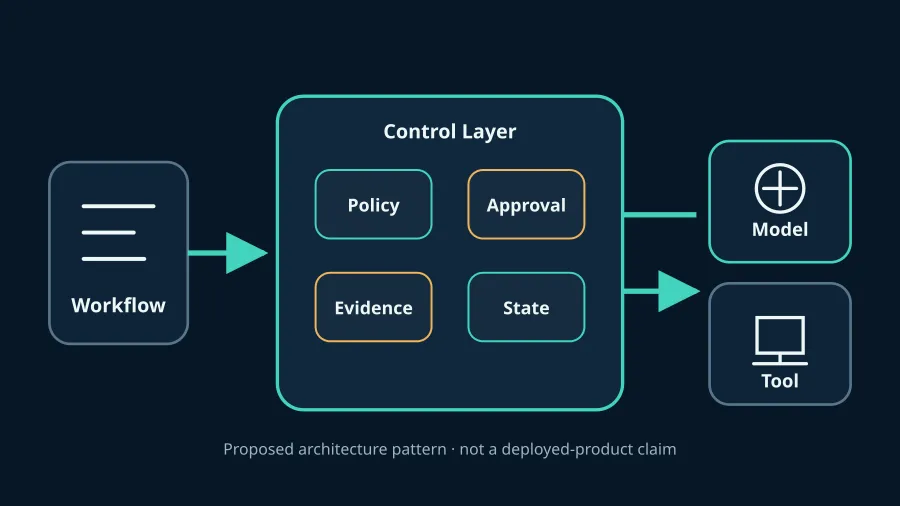
Our standardized MCP Skill Injection methodology completely eliminates this vulnerability by splitting the automation loop into three decoupled layers: Context Engineering, Harness Engineering, and Loop Engineering. Every database query, CRM lookup, and automated client interaction is explicitly abstracted and managed via an independent, server-side data-exchange mapping protocol. [Master LLM Brain] ──► [Central Model Context Protocol Gateway] ──► [Dynamic MCP Skill Library] │ ▼ [Clinic / Firm Billing] ◄── [Decision_Audit_Gateway] ◄── [Unique Path-Dependency Audit Registry] When an autonomous agent receives an operational request—such as auditing a post-treatment recovery log at a Bangsar aesthetic clinic or generating a financial ledger for an M&A file in Singapore’s Downtown Core—it does not execute a direct database function. Instead, the central n8n runtime infrastructure references a specialized Postgres Policy Registry to dynamically load a sandboxed MCP skill library. The interaction path is explicitly recorded within a permanent, immutable ledger known as the Data-Exchange Path Audit Registry.

By standardizing this communication boundary via open Model Context Protocol standards, the enterprise anchors its unique operational workflows directly within its own secure infrastructure. The external AI model remains a swappable commodity execution engine, completely removing technical lock-in.


🛠️ Blueprint Breakdown: The 3-Tier Sovereign MCP Automation Architecture

To enable corporate directors and managing partners to maintain absolute platform governance without requiring deep programming skills, our production blueprint is divided into three highly organized operational tiers:

Node 1: Dynamic MCP Service & Modular Skill Library

The core integration layer that packages the firm’s unique business logic into highly secure, reusable, and portable server-side automation skills.

  • Sovereign Workflow Encapsulation: Converts manual operational protocols (e.g., patient clinical charts, legal precedent lookups) into open MCP skills stored directly within the firm’s private code repositories.
  • Swappable Model Agnosticism: Standardizes how autonomous agents connect with internal tools, allowing executive leadership to swap underlying AI models (e.g., Anthropic Claude, Google Gemini) instantly without rewriting any software integrations.
  • Sandboxed Execution Harnesses: Restricts each injected automation skill to a tightly confined, read-only environment, ensuring automated tasks remain completely isolated and secure.

Node 2: Unique Data-Exchange Path Logging & Row-Level Isolation

The database engine layer that transforms custom operational data paths into a permanent, highly secure corporate asset while preventing unauthorized horizontal data exposure.

  • Path Dependency Mapping: Systematically documents every data translation, database query, and API handshake, turning complex internal automation processes into a highly valuable, well-documented corporate property.
  • Postgres Row-Level Security (RLS): Protects high-net-worth (HNW) client files by verifying access clearance at the row level before any injected MCP skill retrieves a record, blocking data leakage from prompt injections.
  • State-Driven Memory Preservation: Prevents loop stagnation or infinite processing loops by tracking state variables onto local disk repositories, avoiding common context-window failures.

Node 3: AI Performance Monitoring & Decision_Audit_Gateway

The automated management layer that tracks the business value, operational safety, and token cost metrics of your entire autonomous workforce.

  • Real-Time Guardrail Monitoring: Deploys a distinct Generator/Evaluator architecture where an independent Reviewer Agent continuously tests processing quality, instantly pausing workflows if an automated response drifts from strict corporate standards.
  • Granular Token Re-billing Ledger: Leverages the Decision_Audit_Gateway to monitor the exact processing overhead down to the millicent, converting technical infrastructure costs into case-level or branch-level billable data.
  • Strategic High-Margin Monetization: Empowers elite firms to re-bill raw technical runtime costs back to corporate clients or premium aesthetic packages with a 200% to 300% markup, presenting the service as an advanced “AI-Powered Real-Time Recovery & Optimization Monitoring Ledger.”

💡 Conclusion: Protecting Corporate Sovereignty in the Era of Agentic Automation

In the competitive corporate landscapes of Kuala Lumpur and Singapore, operational agility combined with complete data control is your strongest competitive advantage. As autonomous agentic loops move from a modern luxury to a fundamental business requirement, the organizations that lead the market will be those that protect their operational workflows from generic cloud vendor lock-in.

By deploying a sovereign architecture anchored by dynamic Model Context Protocol services, sandboxed skill libraries, and a revenue-generating Decision_Audit_Gateway, you establish an unbreachable wall around your intellectual property. You provide continuous, hyper-personalized, and completely secure automated operations to your high-net-worth clients while transforming a traditional IT operational cost into a highly profitable, self-sustaining revenue engine. Secure your organization’s technological freedom today.


Back to Blog